

Musculoskeletal Pain and Injuries
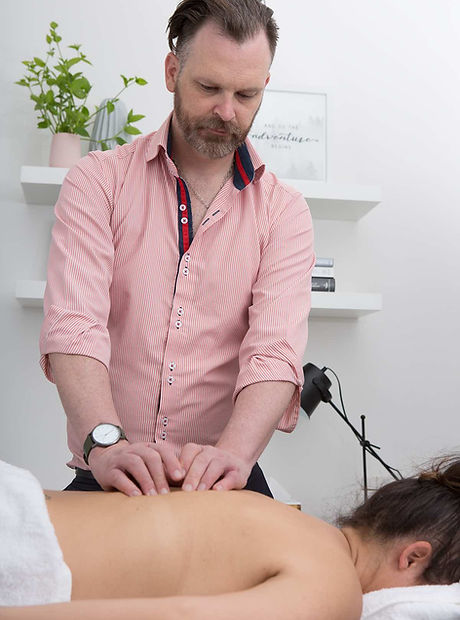
Pain and stiffness are among the most common reasons people come to see me for acupuncture at my Frewville clinic. Symptoms may begin after a sporting injury, an accident or repetitive activity at work. Sometimes they develop gradually without one obvious cause. I see people with recent injuries as well as longer-term or recurring musculoskeletal pain.
Musculoskeletal pain can involve more than the area where it is felt. Muscles, joints, connective tissue and the way different parts of the body work together may all need to be considered. For example, lower back pain may also involve the hips and gluteal muscles, while neck pain may be influenced by the muscles around the shoulders and upper back.
My approach
I begin by talking with you about your symptoms, how they started and which movements or activities affect them. I then assess the painful area and the surrounding muscles and joints to help decide on an appropriate treatment approach.
Depending on what I find, I may use techniques including:
-
Motor point acupuncture
-
Electroacupuncture
-
Distal acupuncture
-
Cupping or gua sha
-
Soft-tissue techniques
-
Bowen technique
I don’t use exactly the same treatment for everyone. The techniques I select and the areas I treat will depend on your presentation, health history and how you respond to treatment.
Because pain can have many different causes, acupuncture may not always be the most appropriate first step. If your symptoms require further medical assessment or investigation, I will discuss this with you.
Common pain presentations
You can read more about my approach to some of the conditions and areas I commonly see in the clinic:
Lower back pain
Lower back pain may involve the muscles and joints of the lower back as well as the hips, pelvis and gluteal muscles.
Learn more about lower back pain acupuncture
Neck pain
Neck pain and stiffness may involve the neck itself as well as the shoulders, upper back and surrounding muscles.
Learn more about neck pain acupuncture
Headaches
Some headaches may be associated with tension or sensitivity in the muscles and joints of the neck, jaw, shoulders and upper back.
Shoulder pain
Shoulder pain may involve the shoulder joint, rotator cuff muscles, shoulder blade, neck or upper back.
Knee pain
Knee pain may be influenced by structures around the knee as well as the muscles of the thigh, hip and lower leg.
What to expect
At your first appointment, I will ask about your current symptoms, relevant health history and what you would like to be able to do more comfortably. I will explain the treatment options I consider appropriate and give you an opportunity to ask questions before we begin.
Your response will be reviewed as treatment progresses. There is no single treatment schedule that suits everybody, so recommendations may change according to your presentation and progress.